Released September 10, 2026
Clips that play at whatever your phone can keep up with, a sharp picture when you let go of the scrubber, and cameras told apart by when they started recording.
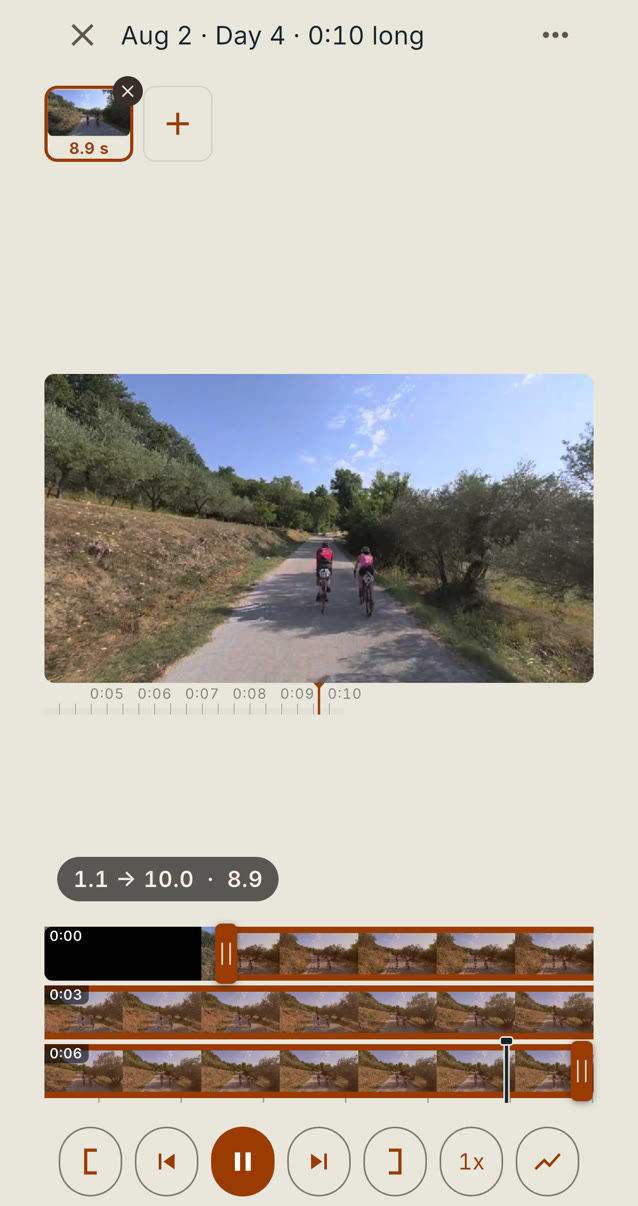
Picking the ten seconds worth keeping out of a four-minute clip means watching it, and on a phone that used to mean watching it stutter.
Your phone works out what it can keep up with and plays at that. A frame you park on is then redrawn sharp, so the frame you are judging is a better picture than the one you were scrubbing through. The sharp one lands as you lift off, rather than a second later when you have already moved on.
How it works today: Photos and clips
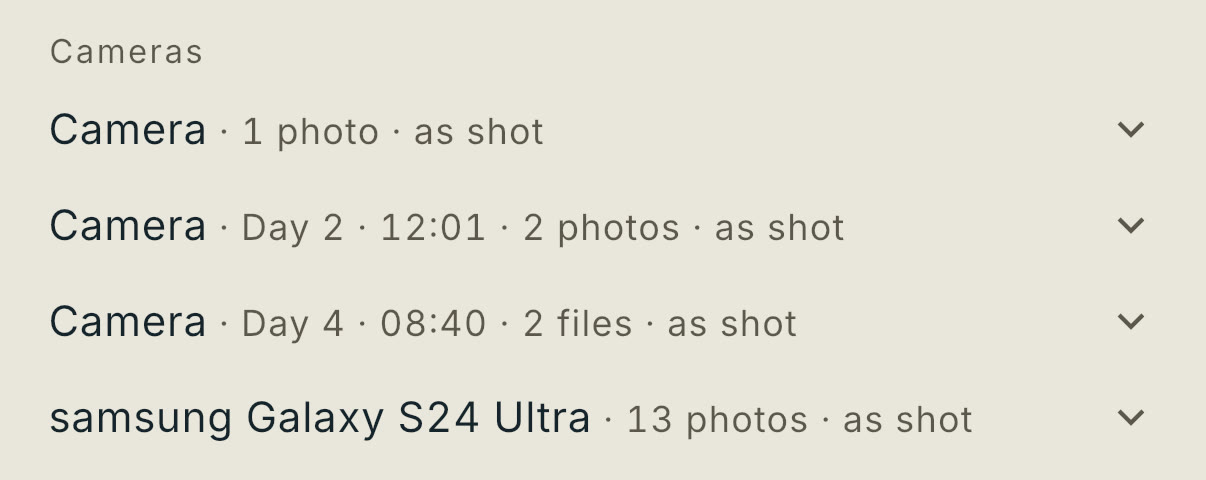
More than one camera on one trip, and none of them writes a name into its files. They all used to read as "Camera". Now each one carries the day and time its files start, so you can tell them apart by something you recognize.
A camera whose pictures have no time on them at all has nothing to carry, and stays plain "Camera".
It matters because a clock correction applies to a camera. Getting the wrong one moves the wrong set of photographs.
How it works today: Photos and clips
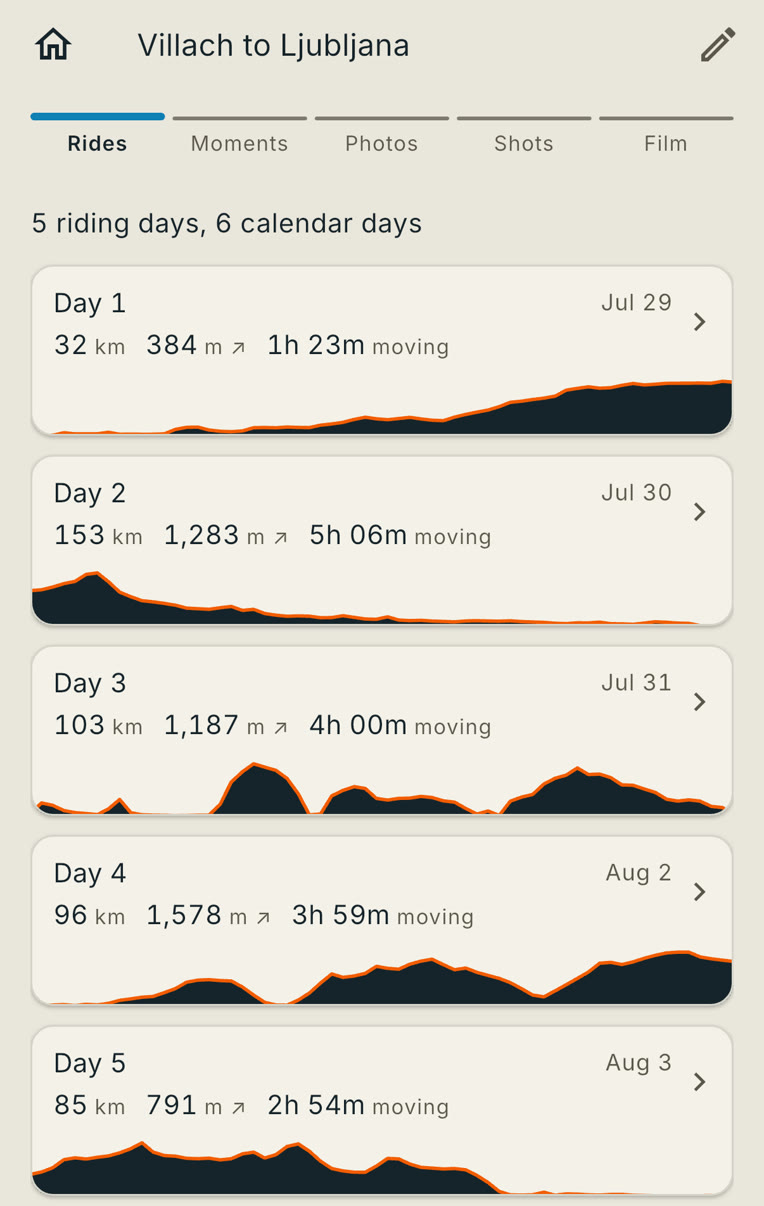
Each day tile draws the shape of its climbing, and every day of the trip is drawn at one scale. A flat day looks flat next to the day over the pass, which is the comparison you are actually making when you scroll the list.
How it works today: How a trip is put together